Understanding Pain with Dr. Paul Lynch: Hope, Identity, and Healing
Episode Overview
Dr. Paul Lynch is a pain management physician and anesthesiologist who believes good medicine treats the mind, the body, and the spirit together. We talk about the difference between pain and suffering, the role of hope in healing, and the importance of identity when you're living with a diagnosis.
This conversation includes discussion of addiction, overdose, and suicide. If you or someone you love is struggling, you can call or text 988 anywhere in the United States. It's free, it's confidential, and you don't have to be in crisis to reach out.
About Dr. Lynch
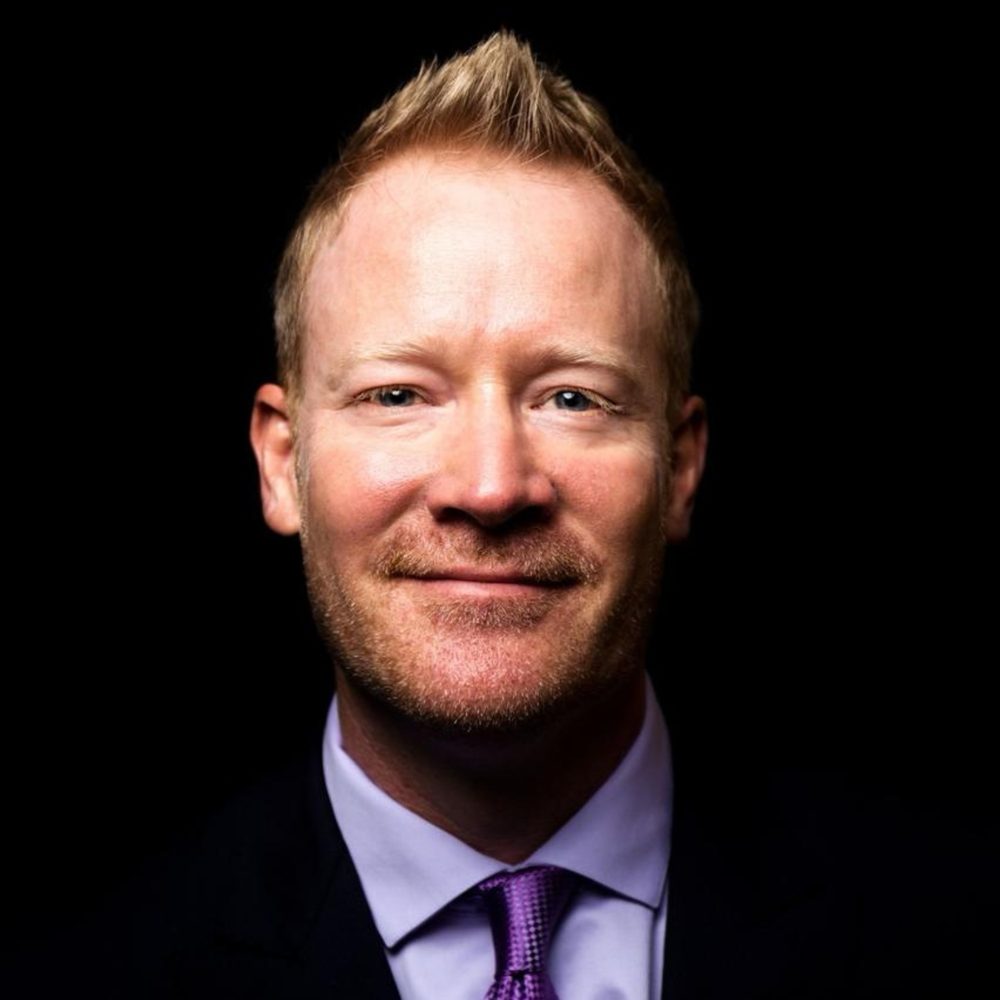
Dr. Paul Lynch is an interventional pain physician and anesthesiologist, and the founder and CEO of US Pain Care, a physician-led national group with locations across seven states. He is also the creator of Crash MD, a superhero comic he writes to make conversations about mental health, addiction, and suicide easier to have.
What We Talk About
- The phone call his father took when Dr. Lynch was nine, and how it set the direction of his whole career
- Why he left psychiatry three weeks before graduating medical school
- The difference between pain and suffering, and why that distinction changes what's possible
- The role of hope in healing, and the mentor who taught him that
- Mental whiplash: when your brain keeps replaying the moment your body learned it wasn't safe
- Why he treats opioid use disorder as a side effect rather than a moral failing
- Identity, and what happens when someone starts to see themselves as a patient first
- The Global Pain Scale, and why a number between zero and ten was never enough
- Crash MD, the comic he writes to make hard subjects easier to talk about
- The two numbers he wants everyone to know: 988, and one
Find Dr. Lynch
Mentioned in This Episode
- "Why Are We So Darn Uncomfortable Talking About Mental Health?" The article Dr. Lynch shared with his own children, from The Story of Us Project.
Read the transcript
This transcript is lightly edited for readability.
Edie: My guest in this episode is Dr. Paul Lynch, a pain management physician, anesthesiologist, entrepreneur, and the founder and CEO of US Pain Care. He's also a husband, a father, and the creator of Crash MD, which is a superhero comic that uses storytelling to make hard things like mental health, addiction, and suicide easier to talk about. One quick note on the sound. We recorded this in a studio, and my sound did not turn out as well as Dr. Lynch's. My voice sounds distorted in several places. And in some parts it doesn't even sound like me at all. It almost sounds AI-generated. That's how this came back from the studio, and of course, that was disappointing.
But I'm using this as a chance to practice what I preach, which is not letting perfection hold you back. This conversation is an important one, and I want to share it with you. We talk about pain, including the part of pain that doesn't show up on a scan, the role of hope, why identity matters so much when you're living with a diagnosis, and why Dr. Lynch thinks empathy is an essential part of good medicine. Dr. Lynch also talks about his family, his faith, and the losses that have shaped the way he practices.
An important note, we do discuss addiction, overdose, and suicide. If you or someone you love is struggling, you can call or text 988 anywhere in the United States. It's free, it's confidential, and you don't have to be in crisis to reach out. With that, I hope you enjoy my conversation with Dr. Paul Lynch. Dr. Lynch and I met in March of this year when we were both speaking at the American Case Management Association's annual conference for the Arizona chapter. And I remember sitting in the audience and being so struck by your presentation because you're a pain management physician and an anesthesiologist, but your presentation was about so much more than medication or procedures.
It was this beautiful holistic approach. And I'm so excited to have that conversation with you.
Dr. Lynch: Thank you for having me. I thought we knew each other longer than that. I feel like I've known you for years now. We've had so many conversations about how we could work together to help patients and the holistic approach to medicine. But yeah, I guess it was just March of this year.
Edie: Yes, I know. When I saw that date, it feels longer. I've loved, loved my time getting to know you and Janne. Before we dive into medicine and pain and your approach there, I'd love to actually start with your story, because you didn't always intend on going into pain medicine. So can you take us back?
Dr. Lynch: Sure. Yeah, I did a podcast a couple weeks ago, and the guy that was interviewing me, he's a dear friend, and he's also runs a very large pain group, and the two of us are so similar 'cause we're both CEOs and, but we're not like the typical CEO. It's all finance and numbers and business. We really are, are both of us pretty obsessed with, the underlying, you know, patient. His name's Jeff Ellison, just a wonderful friend. But he asked me to go back, way back. He said, "Go back way," and I said, "Well, if you want, I could go all the way back to conception." "Is that too far? Is that too..."
So I won't go back to conception, but what I, what I would say is if you go back to my childhood, that's really where my pain story started. My dad is a licensed clinical social worker, and I grew up watching him help patients. And when I was nine years old, he took a phone call in the kitchen. You know, this is Louisville, Kentucky back in the 1980s, and so it had like a cord on the phone, you know? And, that was hard for me 'cause I would pace, and I had this cord, you know. But he takes this old school phone, and I can tell it's a pretty serious phone call. So he waves me over. I'm nine years old, pretty hyperactive.
And he writes on a piece of paper to go next door and to call 911. I focus real fast, you know, and to send them to this address. And what, what was going on is his patient was going to kill herself. And she called my dad. It's one final phone call. She just wanted to say goodbye. And it's a cry for help, right? But it's also, it really was a goodbye. It was like, "You were always so good to me. You treated me well, and I wanted to let you know that, I can't go on." And so, I still remember the address. She was on Bardstown Road in Louisville, Kentucky. I ran next door.
I was so excited to, be involved in this, like, saving of someone's life, right? So we call the police, they went there, and they saved her. And that really started me on this journey. I like to say that I've been chasing the dragon of saving lives ever since that moment. Like, I've literally dedicated my entire life to wanting to save lives. And, Originally, I wanted to be like my dad. It's like he saves lives all the time apparently. And so I want to be like, you know, my dad. I wanted to be a psychiatrist, and so I went all the way through school. I was actually a psychology major in college, even though they told me not to do that 'cause psychology majors didn't get into medical school.
That's changed a lot, by the way, in the last 25 years or so since I went to medical school. But, I was a psychology major. I went to medical school, and I matched in psychiatry, and so up until I was 26 years old, that was my plan, was to become a psychiatrist and help people with mental suffering. And then, right at the end of medical school, about three weeks left of medical school, you've met Janne, my lovely wife. We're married. I'm from Kentucky, so I got married really young. And we've been married 29 years. And so we were right at the end of, medical school about three weeks before I graduated, and Janne's mom was diagnosed, with a rapidly progressive form of pancreatic cancer.
We didn't know all that at first. We thought it was like, a cancer that was going to give her a lot of time and that, you know, she might make a full recovery, but it was it was very rapid. And the family asked me to go to the hospital to kind of help, 'cause I was a medical student. And, the main thing that she needed help with was pain control and I knew nothing about that. I started researching and Googling and, looking for websites, and she had seven fractures in her spine. And I know you know about osteoporosis and the importance of bone health. When you get, cancer, sometimes the cancer will spread, and it spreads to the bones. And so when it does, it's different than osteoporosis.
It's a pathological fracture is what we call it, where the bone is kind of eaten away by a softer tumor, and then the bone will collapse. And so, She had seven, a lot of pain. And when they would maneuver her on and off of tables for imaging or for treatment, it was like she could barely tolerate the pain. So I started researching, things that we could do to help her. The first one I found was a procedure that would fix these fractures. Kyphoplasty was the name, where if there's a bone and it fractures it, in the bones it's called a compression fracture, where it just collapses. You know, it's different from the way your arm would break or break in two.
It collapses. It's a crush injury. And so she had all these fractures in her spine, and I found out that you could do this procedure where you put a balloon in it and you expand it and it reestablishes the height, and then you could put cement in it. And literally as I was reading about that I was like, "This is what I want to do with my life. This is amazing." Like, I cannot believe. No one ever told me about this. By the way, that procedure was just invented probably four or five years before this story. So it was a lot of people had never even heard about it. I started calling around town. I couldn't find anyone that did this procedure, and ultimately just said, "Well, I'm going to do it."
I'm going to literally drop out of psych, and what if I could help people with their mental suffering, but also help them with their physical suffering? And I thought that'd be the perfect job.
Edie: Yeah, such a beautiful blend. As I'm hearing you tell part of your story, the thing that stands out to me, Dr. Lynch, is how it sounds like you have had self-trust. Was it easy to go against what your advisors were saying, to drop out in the last minute? Or even, like you mentioned, going into, psychology?
Dr. Lynch: It's such a good question. It's a really... You know, we were talking ahead of this about the podcast I did with my friend Jeff, and he's such a good interviewer that it felt like doing two hours of therapy with my friend. But that kind of question is a very, deep question. I've never really thought about it so much. But, yeah, that might be one of my superpowers is self-trust, and some people might say that I never listen to anyone, that I always just do what I want. Maybe that's the truth, or maybe I trust myself, or maybe, I don't know exactly how I would say it, but I certainly am a leader, you know, from day one. I never really worked for someone. I started my own practice. I write the protocols, and I do what I think is right for the patient. And that could be a very terrible thing if I had bad instincts, right? If I was trying to take advantage or just trying to make a lot of money or whatever with my self-trust, it could be bad.
But I try to hold myself accountable to a very, very specific North Star, which is to treat every patient... You know, originally I said I would treat every patient like my own mom or dad, right? Every single patient like my own mom or dad, but I came up with that when I was, like, 30, so I was kind of young. And then as I got older, I started thinking about how I treat my own mom or dad or my own brother or sister, and that's a whole story, in and of itself and with my younger brother. And then as I got really old, couple years ago, I took my daughter to Phoenix Children's. She broke her arm. I started thinking about the way I would treat my own daughter, right?
And so I've gone through, like, this, progression of how I treat my own mom or dad, my own brother or sister, my own daughter, and I've kind of settled on how would I treat my own family, right? And so through that lens, yes, I do have a lot of self-trust, but my North Star is what would I want for my own family member.
Edie: I can see why those stories stuck with you. Your nine-year-old story and then seeing your mother-in-law suffering in pain. Yeah. When you talk about helping people with the mental suffering and the physical pain suffering, what does that look like when you're in pain medicine? How do you do that?
Dr. Lynch: Yeah. It's been a journey. I've been doing this almost 20 years now. It's 19 years since I started my first practice here in Scottsdale. And when I first started, my dad even joined me the very first month, which was awesome. So I worked for my dad my whole career. And I would send patients to see my dad, and they would always say the same thing, "I'm not crazy. This isn't in my head. Like, this is real." And I, and I would always just say, "Please, I'm so sorry if I made you feel that way. I'm not sending you to my dad because I think this is all in your head. I'm sending you to my dad because you just told me that you've had 10 out of 10 pain for the last five years, and nobody could help you.
And I just think about how hard that would be to deal with, and that you should have someone to talk to. And I can talk to you, but I gotta go to the next room in a minute and see someone else, and my dad can spend an hour, and he's been trained to understand how you're feeling and how to help you." And patients would, would listen to me. You know, these days, 20 years later, it's becoming more the standard of care. We're all realizing, you know, what I was telling them 20 years ago, which is, well, of course, there's going to be a mental effect of daily suffering, right? And of course, you should have someone to talk to. When I first started, we talked a little bit about insurance and how frustrating it can be, right? When I first started, it was blanket denials across the board. Anytime I've tried to do cognitive behavioral therapy or biofeedback or neurofeedback or anything that had to do with the mind, the insurance would say, "Oh, that's frou-frou, not evidence-based." They still do that some, but it's got better.
It's got a lot better.
Edie: Yes. Can you speak to, Dr. Lynch, the difference between pain and suffering? That was one of my favorite conversations that I had at dinner with you and Janne.
Dr. Lynch: Wow. So I mean, that's, that really is the crux of what we do with cognitive behavioral therapy, right? Is, your life is pain, right? We're going to go through so much pain in our life, but there's a difference between physical pain and suffering, and we describe suffering as like the psychological overlay on top of the pain. Your mind's seeking to assign, meaning to the pain, and if you assign positive meaning, like, Mother Teresa actually talks about in one of her books, I can't remember the name, but she talks about one of her books, to be able to assign meaning to the pain, meaning to the suffering, meaning to all the terribleness around you, and if you can assign that meaning through service or hope or God or love or strength, you can take the terrible things and you can actually put a spin on it.
When someone is suffering, they put a negative spin on it. They feel pain and then, if that pain is from a tumor that's growing in them that they know is going to kill them, then there's this psychological meaning on it that it's not just pain, it's death, right? That feels a whole lot different than I have pain because I ate too much pizza and had a great time, and you assign a positive emotion to that pain. And so suffering is really this negative connotation that's applied to the pain that you're having. And so when I send patients to my dad, there's a lot of things that you could do in therapy, group therapies, family therapies, support groups, biofeedback.
We have all these, things that we can, touch on. You do tapping. But one of the primary cores of what he does is CBT, or cognitive behavioral therapy, where he tries to reframe their kind of negative schemas and their negative associations around the pain, or he tries to reframe it with the patients, and that's part of how we get them to feel better.
Edie: It makes me think of what you write about in Crash MD. I'd love for you to share why you're writing that, and then maybe we could explore Cognis and certain aspects that really stand out to me.
Dr. Lynch: Well, I think you're the first person ever to interview me about Crash MD, so when my face kinda lights up, it's because I think it might be my favorite thing to talk about.
Edie: Oh, yay.
Dr. Lynch: And, I'm not sure how much time you have, but I can spend hours talking about Crash MD. So Crash MD, is an idea I had years and years and years ago. I'm a pain management doctor, as you know, but for your, for your listeners, or viewers, there's a lot of different aspects of how we treat patients in pain. You might be a doctor who works in a hospital at the end of life with cancer, like I talked about my mother-in-law. You might be a doctor who works outpatient and you deal with, you know, sports injuries, someone, who has a knee or whatever, but it turns into pain. With Crash MD, it's a very specific kinda niche area of our space where someone's been in a car accident, we call it personal injury, and they're hurt, and instead of going through, like, United Healthcare insurance, it's like GEICO or State Farm.
And so it's like you're being treated in a totally different area of healthcare, by people that, at the end of the day, are not as good at treating healthcare. It's like you're being treated by, car insurance, right? And not health insurance. And so because of that, I think it's an area that is ripe for disruption. It's an area that needs leadership. It's an area that needs better care. And when I go around the country and I talk about this, everybody agrees with me. No one knows quite how to do it. And so I decided, um... I've done several pain management national, you know, deals over my career, and, I sold all my businesses a couple years ago and started over with a 100% physician-led national group called US Pain Care.
And a lot of people, associate me with US Pain Care for good reason, 'cause that's my primary job. I'm the CEO of US Pain Care. But one of our niche areas that a lot of our doctors do across the country is personal injury, and these patients get in wrecks and they come in, and it's all over the board, the standard of care that they might receive. And before I get into, like, the genesis of Crash MD, my biggest frustration has been, you know, I talked earlier about my North Star is what I would do for my own family member. Like two or three people in my family have been in car wrecks, or or I would say close friends and family in the last 12 months.
And what I find is that the care that you get is often way too much care or way too little care, and it's based on two or three things: the size of your policy, unfortunately. So someone who has a really big policy, I'm like, "Oh, God forbid you have a massive policy because you'll get all this treatment you don't need if you go to the wrong doctor." It really comes down to what doctor you chose, what attorney you chose, the size of your policy come completely... You'll get a completely different treatment than someone else, who maybe has, like, no insurance or, you know, With Crash MD, I got all my partners across the country, and we have 36 locations, by the way, in seven states.
There's a lot of us, to agree we're going to treat every patient exactly the same, like our own mom or dad, our own family member. We don't care how big your policy is, how big it is, how small it is. We're going to, we're going to set the standard. Like you talked about self-trust, we are going to set the standard in this space. As I started setting the standard, we came up with this idea to make it a superhero, so then it became really fun, 'cause I'm kind of a writer and I like creative stuff, and I would actually go a step further. I need some sort of creative outlet to kind of balance me out, right? I could do math and science and numbers only so long, and then I need to, like, play the piano or sing or do photography or Crash MD So with Crash MD, I started writing this entire story about a superhero from another galaxy that came to Earth on a mission that I won't completely give away today. But he comes to Earth on a mission, and then I built this whole story around him that he's a doctor, and so he keeps, saving people at accidents, and he's accumulating all these patients that he's saved, and so they start seeing him in his own clinic.
So he ends up being like, by accident I guess, a personal injury doctor on Earth, and, that's the whole story, and it's a lot of fun to write.
Edie: I've enjoyed reading it so much, and it feels like it is your philosophy, your approach, in such a, an easy to understand way, I want to share it with my clients because I think it speaks to the importance of the holistic approach that we've been talking about. Do you mind walking us through Cognis and the other superpowers?
Dr. Lynch: Sure. And thank you. I really appreciate you reading it and, enjoying it and showing it to other people and giving me a chance again today to talk about it. What I decided with Crash MD was that some of the things that I like to talk about are hard. They're really, really, really hard to talk about. I talk about Death. I talk about, depression and anxiety. I talk about addiction. What I realized with the, with the comic is I can talk about difficult things in a really low-stress environment, like a superhero, right? But my superhero doesn't just fly around and save pretty girls, although he does do that. He flies around, saves pretty girls, and then talks about the importance of talking about your feelings and cognitive behavioral therapy and regenerative medicine and like better care, right?
So I get to talk about a bunch of stuff in Crash MD, but first I get to talk about good medicine, and then I talk about difficult things. And so to finally get around to answering your questions, I decided to give my superhero, superpowers. And, I've only released one season, full season. So far, I have five superpowers. I might have a few others that I put in as it goes through season two, three, and four. I've written almost four seasons already. And so but right now I've released five superpowers. So number one is Regeneris, and the reason I chose that as my first superpower, when he first lands on Earth, there's a big wreck, and he goes and uses regenerative medicine to heal the patient's leg.
That patient's actually based on my brother. The very first patient in the very first scene. So if you read season one, it's 10 episodes. The entire season arc is about my brother. If you go back to the story I told you earlier, I was going to be a psychiatrist. My mother-in-law, had cancer, and so I decided to become a pain doctor. Just four months later, literally my story was just so compressed into this short little period. Four months later, my brother overdosed in my bathroom in New York City when I was an intern in general surgery it's a long story with my brother. I won't get into all of it now, but he almost died many times, and then we finally, saved his life with a drug called Suboxone. And the entire Season 1 of Crash MD, I follow this story of a character named Donny. My brother was Danny. And, he's the first person that he saves when Crash, you know, comes to Earth.
And when he goes to his, to his brother or sorry, to Donny, which is based on my brother, his leg was hurt. So my brother had an overdose event in 2006, where he was down for like three days from an overdose on opioids and benzodiazepines that had mixed together. And he was down for like three days before they found him, and so he developed what's called compartment syndrome in his legs, and, he was paralyzed from the waist down. And, he ended up walking again about two years later. The nerves regenerated. He was able to walk again. So in this very first scene when Crash MD comes up on this character based on my brother, I thought about, you know, what I would have done for my brother if I could go back. And so he uses regenerative medicine to regenerate the tissue in the field, and I gave him this superpower, this green light called Regeneris. And so he takes the regenerative, powers, and he rebuilds his leg, and it'sthis, scene. And I based it on the idea of regenerative medicine, which is this really explode-y area of healthcare where we're using stem cells and PRP and other regenerative type, molecules to rebuild tissue in patients.
And it's a real thing. It's not science fiction. So I built it into the comic book, kind of this science fiction, but it's based on a real thing, which is regenerative medicine. As he goes to the hospital, as he's sitting there at night in his spaceship thinking about going back 'cause he got tripped, and it's a whole story that you have to read. But he can't stop thinking about this patient, and he thinks, "I need to check on him. I think something's wrong with his legs." And so I kind of replicate the real story of how my brother got compartment syndrome. Compartment syndrome is a real thing where pressure builds up in a in a space in your body, and as it builds up pressure, it cuts off the blood flow and it leads to the ultimate death of the tissue, and that's kind of what happened with my brother. So Crash is thinking about this patient and like, "I need to check on him." So instead of flying back home to his planet, he goes to the hospital, and it's based here in Phoenix.
So, he goes and he checks on the patient, and then before long, without giving it all away, he gets an opportunity to, use, electrical energy to start a heart, like a defibrillator. So I call it Neuroforce. Yeah. And he's got, this electricity. I do everything with colors, so the first, superpower is green. It's regenerative medicine, and the second one's like this blue light of Neuroforce, and there's so many applications of electricity in the pain space, things like spinal cord stimulation or radiofrequency ablation or, all these other things where we use electricity.
Crash uses it a lot to start the heart when people are, you know dying but then I use some Neuroforce. That was my second superpower. And then within a couple episodes, I bring up the third super, power that we're going to talk about a lot today, which is Cognis, C-O-G-N-I-S. Cognis is a purple light, which is my favorite color, based on cognitive behavioral therapy. And so I go back to Crash's home planet and talk about how he was this world-renowned doctor, and he had these superpowers where he could, you know, help people, and Cognis is probably the one that you see me use the most because some of these patients, they need someone to talk to, you know?
It's not just a pain doctor that's going to do an injection or give you a pill, but sometimes you just need someone to talk to. And so I show Crash, his name is John Crashton, constantly using this purple light, this Cognis, to help heal the patients. And then I talk about two superpowers that are tightly, tied together. I talk about the three superpowers, Regeneris and Neuroforce and Cognis being, like, the backbone of how he practices, right? But then there were these two other ones that he learned from his father. It was based on my mentor in Texas.
So my mentor was a guy named Gabor Racz, and literally people traveled the entire world to see this guy, all over the world. He was from Hungary. He came to the United States. He's one of the first pain doctors, in the world. He started one of the first fellowships, and he trained me. He passed away last summer, and I went to, a ceremony celebrating him in Hungary, in Budapest. And, at the end, we were all telling stories, and I got up to talk to the group.
It was a bunch of doctors from all around the world, and I just told the story that I kinda tell in the comic too which is what Dr. Racz taught us more than anything was, was the power of hope. Hope, right? I told him a story. And I'll try not to get emotional 'cause I'm an emotional person, you know. I told a story of a patient that I treated in my very first year of practice almost 20 years ago. She was a young girl. I'll never forget her. She tried everything for headaches. It wouldn't stop. She was probably 25. And, I was really well-trained. I mean, I... This guy that trained me, most people consider, like at least at that time, the very best fellowship in the country.
Like, I was so happy to go there and train under him. I learned all these techniques to treat, you know, headaches. Nerve blocks in the face and the head and the back of the head, radiofrequency ablations and trigeminal ganglions and sphenopalatine ganglions and, stellates. All these different nerves, sympathetic inputs and parasympathetic inputs and somatic inputs to the head, and all this stuff going through my head that I learned. And I tried all these things for a couple months with this young lady, and she was suffering so much. And we finally, were going to do a procedure that was Neuroforce. It's like you know, in Crash MD, where we placed electrodes on the occipital nerves on her head. And, I was actually at Mayo Clinic, early when I first started treating her, and then she followed me, you know, outpatient.
And at Mayo Clinic, they were doing this large trial on occipital nerve stimulators at that time. So I did an occipital nerve stimulator. I electrically stimulated the nerves, and I was very excited. We did trial. She came back, and it was just like it didn't help at all. And I don't remember exactly what I said. I was going to send her to Dr. Racz I didn't know what to do, and I think I said some version of, "I don't know what to do." So I tried to send, her to Dr. Racz, but she went home that night and killed herself. And it was really hard for me, you know. And I remember thinking, like Whatever I said, she lost all of her hope. You know what I mean? Like, it was, the very smartest pain doctor that she could find, and I tried everything, and nothing worked. Oh my God, that was the last thing that I knew how to do, and it didn't work. She killed herself. And what I told the crowd then, I'll tell you and your listeners, is Dr. Racz had, like, this superpower that he always gave everyone hope, no matter. We were never at the end of the road with Dr. Racz. He always would say, "We have options. We're going to figure this out. I want you to come back next week or next Tuesday or or tomorrow." It was never the end of the road with him, and he had, this, like, a superpower.
We talk about the placebo effect. In some studies, the placebo effect will be as high as thirty percent. It's a pretty high number. Dr. Racz's placebo effect was, like, off the charts because he gave the patient such a belief that they were going to get better. And, I try... Especially after that story, I tried my entire career, to replicate Dr. Racz with these patients' hope. So in my comic, I talk about the first three superpowers, and then I talked about what Dr. Racz... In the comic, the patient's name is Lukacs which is a Hungarian name. And I actually called Dr. Racz's son, who has the same name, Gabor Racz Jr. I said, "I'd like to honor your father by writing, making a superhero about your dad," 'cause his dad was a superhero too.
And the family, was very happy and gave me permission. So I wrote this whole character around Dr. Racz, who had two more superpowers. Number one was hope. It's a yellow light that I show. It's a golden glow that would come over the practitioner, and then you would see it reflected in the patient, this golden glow of hope or faith or placebo if you want. But it's like this belief that you're going to get better, right? And that's my fourth superpower. And then the fifth one A little bit of a darker story in the comic, but the fifth one is this red light called Empathis, right? And it's like hope taken to... And it's not really hope.
It's a little different. The way I describe the Empathis is where you go into the character. You literally go into the body of the patient, into the mind, and you feel the suffering that they are feeling at a deep level. And I tell a story in the comic of this one young practitioner, that I drew a little bit to look like myself. He's arrogant and a cowboy, and he went too aggressively into this patient, and he died himself. And so the council on this planet far away bans Empathis which is a bit of an analogy of maybe the way we feel we practice sometimes in our own healthcare system. But they banned Empathis 'cause they said it was too high risk.
You could never, like, share the experience with a patient too much or you might get hurt yourself. And how much truth is there to that, right? Like anybody who talks to people for a living, like my dad, you do have to put up guards to protect yourself. So I try to tell that story, but Empathis is this red light where it's like empathy taken, to a superhero level, where you could truly go into their body, feel their experiences, understand their pain, and then help guide them back towards healing.
Edie: You've shared so much there, Dr. Lynch.
Dr. Lynch: I talk too much sometimes. You have to interrupt me more.
Edie: No. There's so many things that I think are important to touch on, and thank you for sharing as much as you did. I can't imagine how hard all of those experiences would have been with your brother and with the patient who lost hope. And I can see how they've shaped how you practice. Let's start with hope. You mentioned that it's not reassurance, not suggestion, hope as a force that changed physiology. What do you mean by that?
Dr. Lynch: Yeah. I worked on that line for a whole night. Like, I try to write about 500 words a night because I read that Stephen King used to do that, and I'm not Stephen King. I was like, "Well, 500 words..." I don't know. I thought writers would sit down and write a chapter on the weekends, you know, and that makes sense. Well, I read about Stephen King, which is, what? 500 words a night. I was like, "Oh, that's good. I can do that." I really worked on that session.
Hope as a force, like hope that can change physiology. That's true what I believe. Now, I grew up, in the church, and you could call it healing. It could be like healing directly from God. And in our church, we talk about like faith. I was... Hope different than faith, different than belief, different than placebo. I don't know. I think that it all kind of comes together where from everything I can see, and this is evidence-based, it's in the literature. If you go look at the studies on religion or faith or God or hope, that you can truly heal yourself, it changes your physiology, we even know that.
Healing cascades will show, like, an inflammation in your body, and there's studies that show that you can decrease inflammatory markers with like belief and hope. So I really built this yellow light to bleed and blend between the spirit world and the psychology world. And what's funny is my children actually helped me come up with this. They would tell you, "We didn't do anything, Dad. You were just talking and making us listen while you figured it out." But I don't think that's true. A lot of my writing I'll do, I'll talk to someone else. I'll talk to my wife. We talk to you. Actually, you helped us write chapters as we talked over dinner, I'll talk to my kids and be like, "Hey, is this psychology or is this spiritual? Is hope... Is the yellow light, is it a psychological gift? Is it a spiritual gift?" And what I decide is it's both. I've said it a couple times, but it's belief, it's hope, it's faith, it's God, it's placebo. I don't know.
It's all the body, the mind, and the spirit all kind of blend together in this concept of hope.
Edie: How would you help a patient who's lost hope or who's been through so much, is in so much pain? How do you help someone find hope again?
Dr. Lynch: I think it's back to what we talked about earlier. What is God's plan? Or if you don't believe in God, what is, what is a possible good outcome of this? Is what I do. And but you gotta be careful if you have someone that's sitting in front of you that just, um... I talked to a patient, yesterday whose loved one just died that day before, and I can't just jump in there, "Oh, let me help you redirect that towards..." You have to be able to sit with someone sometimes and just experience that pain. But I think that what I do as a practitioner is constantly push them back towards healing and hope and goodness and positivity, even in the midst of suffering.
Edie: One thing that I think stood out to me too in some of your writing or maybe it was in one of your talks, I can't remember, was how even if you're seeing someone in your practice for pain management, you're asking questions about lifestyle and sleep and emotions. That's something we talk a lot about. And when I think about finding hope again, when you're so focused on the pain, why is that part of the process?
Dr. Lynch: So for years and years, I had a practice here in town, and we... I was so proud. We had a multidisciplinary approach. My dad was just... I look over here 'cause he was always over in the corner over here if I was standing looking at my office, and I would send patients for all the stuff we talked about. And then I worked with a wonderful, chiropractor, that I would send over to this side, and then we had, at times dieticians, and we had physical medicine and rehab doctors and, anesthesiologists.
We had imaging. Like, the idea was we put everything under one roof that we're treating a patient. And the idea is comprehensive, integrated care is 100% the standard of care in pain management. It's comprehensive. It's multiple specialties, coming together. It's integrative. We're all sharing notes, and we're talking, and one of those things is what you're talking about, which is the body. It's not just that you're suffering in your back. It's what are you eating? What's your diet? What vitamins are you taking? What's your weight? Are you depressed? Are you exercising, Are you flexible? All these things are related to your health, right? And so when I would talk to patients, I would send them to my dad to the left, and I'd send them to, Dr. Moore, who still practices here in town, to the right, and Dr. Moore would talk to them about what their diet was and exercise.
So I just want to help you take care of yourself. I believe that that message, is the right approach in pain management
Edie: I love all of that.
Dr. Lynch: I think you know this stuff as well as I do. I've listened to your work and the way you, help people tap, and you learn to reset these traumas that people have been through. But pain and suffering that they're having right now, I try to help the patient reframe. And again, you gotta be careful. If someone comes into the ER and they've got a knife in their back, you don't try to get them to reframe the knife. You help them, right? But the patients that come to me, one of the procedures I do is called a spinal cord stimulator. And, when I first learned about it just... It was one of the procedures I read about when, when I decided to drop out of psychiatry. There was actually three things I read about.
One was the vertebroplasty, kyphoplasty, where I could fix these fractures in the spine, these bones that fracture. I could put a balloon in and blow it out. I was blown away. There was a second one. My mother-in-law had all this pain in her belly, and I read about a plexus of cells about that big called the celiac plexus that sits in front of the aorta, so it's very well-guarded, like in your inner core. Sits in front of the aorta, and if you could get a needle in there safely you could numb it and all the pain would go away in the belly. It was wild. I was like, "God just gave us, like, this little button there that we could just, like, turn it off anytime." And that's kind of what happened.
So when you get pain in your stomach, that's one of the things that they go to. They'll block it, and then they'll ablate it with, like, a alcohol. I read about that. And then the other one is I read about spinal cord stimulation, where you place an electrode into the epidural space between your shoulder blades right behind your spinal cord. When I turn it on, it's like a force field. It can literally, like, scramble the pain signal. You put it, like, maybe that far away from your spinal cord, and when I turn it on, I can block the signals to the brain. How wild is that?
Edie: Wild.
Dr. Lynch: That was the kind of basis of Neuroforce for me is, like, I was so blown away. And so, for us, we want to take away the pain. We want to stop the pain. We want to use these different nerve blocks and techniques and do all that. But the average person that comes to us who gets one of these has been suffering for 12 years. That's what the literature shows. 12 years they've been hurting, and during that 12 years, their brains will change. And so when you suffer every day for 12 years, it changes, right?
Edie: Yes. This is reminding me of other things that you've written that I wanted to make sure we connected on. On unlearning some of the fear loops or pain loops. And then also this concept of mental whiplash
Can you speak to that?
Dr. Lynch: Sure. And I want to be careful. I don't want to, mislead your viewers or even you. I'm not a psychiatrist, I am, a psychology major from college, and I've obsessed about the brain and psych my entire career. But a lot of the stuff that I'm going to tell you about, I'm not the one that actually does it. It'd be like my dad or a psychiatrist that I send to, people greater than me, right? Like, I can talk to you about, the need to get your hip replaced if you get hurt, but I'm not an orthopedic surgeon.
I just know the guys to send you to, right? But that being said, a big part of what we do is we go back, we as practitioners, to when you first started learning these behaviors and talk to and think about why did you learn it that way? What was going on? A lot of times you'll find out that they started down a path that was important at that time, to protect them, if you're a child and your dad comes home, and drinks, and then will come in and beat you might start to develop a behavior to protect yourself, whatever that is, to hide or to go somewhere else or to withdraw from relationships, and that might have been protective at the time. But then if you act that way your whole life, then you don't ever grow, right?
And so you would want to go back to when these things happened to find out what did you do and why, and maybe you don't need that anymore, right? We can, we can choose a different path, and then my dad does that with patients, every day. And then, mental whiplash. So for me, when I talk about mental whiplash. When someone gets in a car wreck, the most common diagnosis we see is whiplash, right? And everyone knows that term, whiplash. What does it mean? I did a teaching session for, some attorneys last week in California.
We have clinics in San Diego, and I was teaching on personal injury, and I brought a spine model, and it shows the spine, like the head at the top. I was like, "When you get in a car wreck, this is what happens," and I shook it, right? Have you ever seen, these, crash test dummies and they'll hit, and you'll see 'em go back and forth? Like, if you slow it down to, like, the milliseconds, sometimes their head will go back and forth five, ten times in slow motion. The whiplash is the way that shaking of the head during the wreck damages all these, little joints are called facet joints or the discs. And we just use the term whiplash, and everyone knows what that means. It can lead to headaches. I started talking about mental whiplash, Which is the same thing, but instead of shaking your neck, you get your mind shaken, right?
And I've only been using that term in personal injury space, but I think it probably applies to all sorts of things. For me, mental whiplash is that patient who gets in a wreck, and everyone's trying to treat their body, but they're not aware that they can't drive anymore. I've had so many patients that tell me they just stopped driving after an accident because they're so afraid, and that's what I started calling mental whiplash. You went through a really, really hard thing, and we could treat the mental whiplash the same way we treat your neck, your physical whiplash,
Edie: Yes, to address the fear from the accident and how it's showing up in your present day.
Dr. Lynch: That's exactly right, and I don't think that's uncommon. I think that in my experience, I've been asking all my patients recently, who've been in an accident, "Hey, tell me about, is it hard to drive? Are you okay driving?" And I think it's over 50% have some, I hate to use the word pathological, but that's the term we use sometimes when it's, negative and there's a diagnosis associated. But a pathological fear of driving. I'd say it's over 50%. They, they either drive less or, their husband or wife will drive them to work, or sometimes they're driving down the road and they get overwhelmed, they just pull over. It's really common, and we don't treat it very well in the personal injury space because, everyone has this idea that if you admit that you're having no issues, that that means your injuries are all in your head, and they believe that they won't get a settlement or if it ever went to court, the jury would think they were crazy. And so there's, this stigma against mental health, and I think it's very strong in the personal injury space.
Edie: That's so sad to hear because it impacts your day-to-day life. I like the questions that are asked in season one, though, to normalize that and to give the patient hope in being able to get to the root of where that fear is coming from. You speak to how it's when your brain keeps replaying the moment your body learned it wasn't safe. That's a big thing for my work where, mm-hmm it is a learned thing. There was some experience. And you've shared several examples, whether it was a traumatic event during childhood, a car accident, but your brain's picking up on these aspects and tagging it with fear.
Dr. Lynch: This concept of the moment you learn you weren't safe. And so I think about someone who's been in a car wreck, 'cause I talk to some patients that have serious PTSD after driving. I just want to be clear on the filter. I'm seeing patients that have been in accidents, and some of them just, they can't work. They can't... They have this mental overlay. That was the moment they realized they weren't safe. I think about, like, a dog bite. If you got bit by a big Doberman Pinscher, and it came in and bit your arm, that would be probably one of the most traumatic things you've ever been through in your entire life, like this dog attacking you.
And most people would be like, "Oh, yeah, I bet they're nervous around dogs." Well, it's no different if you get in a car wreck and someone comes across the barrier and hits you. Like, it'd be the scariest moment you've ever been through, and sometimes when you get behind the wheel, you replay that over and over. You replay the moment you learn you weren't safe. And so you go back to that, and you recreate it, and the whole point of Cognis is to get you to redirect that, to reframe it, to go back to that moment, to talk about it, and then to move beyond it.
Edie: Such an important part of pain management. And Empathis. Empathis. The thing that comes up for me when I hear you describe that, superpower it makes me think about the clients who have been to doctor after doctor, told their scans are fine but they're dealing with pain. And so I love the idea of a doctor being able to feel what your experience actually is. Wouldn't that be amazing?
Dr. Lynch: You've probably heard this term being an empath or my superpower Empathis are all part of this, idea of being willing to truly experience what the patient's going through, And, it takes a lot of energy. It takes a lot of time. It might not be covered by the payer. Like to truly have an empathetic, or empathic connection with another person can take hours sometimes. We don't have that. You know, it's being able to sit with someone and listen to them almost like we are today and understand who the person is and who they are and what's important to them. And as you get closer and closer and you become kind of one with the patient, you have to be careful, that you do have some safeguards around your own psyche, right?
When I went through, training as a kid, I remember when I was 16 years old, I was doing. It was a teen crisis training with my church, and I was like 16. I got to help kids that went like a shelter or maybe they were suicidal, and they came in. I was like one of the teen counselors. So the very first thing I remember, they, they tried to teach me the difference between sympathy and empathy. And the way they taught it, they showed like the character and they're, they were down in a ditch, and you're reaching down in... Or no, sorry. They showed the person go all the way down into the ditch with him, and they said, "This is sympathy."
And- there's a better way, which is you stay up, and you put a stick down, you protect yourself, you pull 'em out, and that's empathy. I remember learning that. And then as I started getting older, I learned about this concept of like an empath and what that means, or you read people and, you know, Long story short, for me and my entire career in healthcare, what I believe is that we don't value sympathy or empathy or Empathis or being an empath a comfortable way. We put up guards. We're very clinical. We put on our white coat. We stand on the other side of the table from the patient. We put up barriers.
And I think that a better way is being able to, meet the patient where they're at, truly understand their experience. It takes time. It takes caring. And yeah, sometimes it puts our own minds, our own hearts, on the table. But that's okay. I think it's a better form of medicine
Edie: I agree. I know you have touched on addiction.
Dr. Lynch: If it's okay, can I just say one more thing on empathy before we move on? When people talk about, like, what's an empath? I believe I'm an empath, but I don't think that I was just born as an empath. I think I was born to my mom and my dad. My mom's a nurse, my dad's a therapist, and I watched them taking care of people their whole life, and they focus on people. And I learned how to do that. Like, I learned how to be empathetic. I learned how to be an empath.
I go to Africa a lot with my wife. I love going on safari, and I do photography and whatnot. And you'll watch these guides, and you think that they're, like, godlike with their powers. They can literally be, driving and stop. "I smell a certain type of rodent that lives here." And you're like, "Whatever." And they'll go over, and they'll find it. Like, they hear things that you don't hear, and they smell things that you don't smell, and they see things that you don't see. They weren't born with that gift. They trained how to do it, and they're like empaths for animals. Does that make sense? Yes. They know their behavior. We would go there, and they'd say, "Oh, they're drinking water here.
They're... Next, they're going to go over this ridge and here. They always..." And they know what they're going to do because they've studied them, and they've watched them and... Right? Does that make sense? I believe that a practitioner, a doctor, a therapist like yourself who focuses on people and studies people and watches them and watches their eyes and watches their pupils and watches their body language and watches their perspiration, you can know so much about the human by studying them.
And I think that being empathic or empathetic really comes down to how seriously are you taking your job, and are you looking at the person? Are you thinking about them? Are you are you engaging, or are you just walking in, running your script, and leaving the room?
Edie: I'm so glad you paused us and came back to that, and it made me have two things come to mind that I think is important for us to connect on too for listeners. And one, just to clarify, I'm not a therapist. I'm a health coach and clinical EFT practitioner. Yeah. One thing that came to mind for me, Dr. Lynch, is that I would never want any part of our conversation to lead a listener to feel like it's all in their head. And when you're dealing with so much pain, being told to just think positive is not the message here.
Especially if you're someone who is trying to get to the root of the pain or to find a solution, and you haven't found one yet. Any thoughts that you'd want to add there from your experience? Because I'm sure you've heard that.
Dr. Lynch: Oh my gosh, so many times, and I want I want patients to understand so much that I do not believe their pain is in their head. I believe when they're hurting, their head is one of their greatest allies, right? And so I talk about in Crash MD, I think it's season five or season one, episode five, that Crash believed that a, approach to medicine that did not include the mind was an inferior form of medicine.
Edie: I literally wrote that part down.
Dr. Lynch: But it's not just the mind. For me, it's the mind, the body, and the spirit, right? And there is data showing all three... If you go to a practitioner and all you get is treatment of the body, or you go to a practitioner that treats the body and the mind and the spirit, I believe based on data research and my own 20 years of experience, that the second one is just a much better outcome. And so I constantly try to push my patients towards employing their mind and their spirit as part of their treatment plan.
Edie: Perfect. I'm glad we covered that. Is it okay to spend a little bit of time on addiction? I think that's an important thing to address in pain medicine. I'm curious how your personal experience with your brother shaped the way you practice.
Dr. Lynch: You know, what's interesting about this conversation is I want to kinda segue from what we just talked about into this. Like, patients who say, "I don't want to hear about how this is all in my mind." And I'll say, "Oh my gosh, that's not what I meant to say at all." And then I try to reframe, right? We need to, enroll your mind as an ally to help you fight your own pain, right? It's your mind, your body, your spirit. We're going to take all three, and we're going to go after your pain. When you talk about addiction, it's the same thing. I have patients that will say, "Well, I'm not addicted to these pills," and, "You made me feel like an addict 'cause you were trying to reduce the pills."
Or, and I, that's the last thing I ever want, is for a patient to feel like I'm saying that they're addicted to pills. Or when you hear me talk, on social media or I give a speech about the importance of treating addiction, I'm not talking about my pain patients are all addicted to pills. I'm saying if you come to see me, and I give you, an opioid, and you become addicted, then I'm not going to kick you out of my clinic and act like there's something wrong with you or that there's a moral failing.
I'm going to treat you just like a normal side effect of any medicine. I mean, if you've taken any medication, every single drug has side effects, right? Ibuprofen, sounds great. It can cause GI bleeding and kidney shutdown. If I gave 'em ibuprofen and shut down their kidneys, and they came to see me, I don't go, "Well, get out of my clinic. You're a terrible person. Your kidneys are bad." Right? That would never happen. But if I gave 'em Percocet, and they got addicted, and they came in, we kick 'em out and act like they did something wrong, right? And so for me, when I talk about addiction, the first and most important thing that I always want to say is I am not trying to tell the pain community that they're all addicted to pills.
I'm just saying if you get addicted to pills, you have a safe place in our clinics, right? We're going to help you. In my mind, there's no difference in, becoming dependent or addicted on opioids and becoming constipated from the opioids. They're just a side effect that may or may not happen. But that is a background. I like to tell people I'm incredibly biased, incredibly, incredibly biased. When I started my career in pain. I had what I call about a four-month honeymoon period where I was like, "Oh my gosh, this is the greatest specialty." Like, you know, these procedures are so amazing, and these pills are really helping people.
This was 2002, so it was like the height of like opioid prescribing, right? We were literally writing about 100% more opioids in 2002 than we are today. We were throwing it at everything. You got headaches, opioids. Belly pain, opioids. Low back pain, opioids, right? And so that's what happened to my brother, and my brother, was, he was, 20 years old. He might have actually been 19 when he got his first script for Percocet, from a primary care doctor for low back pain. So today it would, it would not be very common to give a 19-year-old Percocet for low back pain. Maybe if it was really bad or some surgery or whatever, but he just kinda had some spasm in his back, and he got Percocet, and he rapidly became addicted, like rapidly.
Within 90 days he was doing heroin. And he came to stay with me in New York. I got him a job in a research center that I was working at, and I was so excited to spend time with him. And then, he went in the bathroom one night and locked himself in the bathroom and shot up heroin and stopped breathing. I mean, he literally hit the floor and, I guess he was unconscious for a period of time. We broke down the door and found him with a needle in his arm, and that was the first time I'd ever seen, a, you know, a heroin needle. It was the first time that I knew that my brother was addicted to opioids. It was the first time I saw a overdose.
It was like, you talk about these shocks, these traumas. That was a pretty traumatic event, you know, for me. And, I still remember all of it like it just happened. We resuscitated him. My friend was there, who was, also a doctor. We resuscitated, we took him into, my bedroom, and I can just remember crying with him, and he was apologizing and just so much guilt around it. And I helped him get into therapy, and like I just felt like I'd saved his life, and we did it, and I was really happy. And he was better for a couple of weeks, and then he relapsed. And we got him into treatment again, and then he relapsed.
And then treatment and relapse and over and over for a decade. And so I decided I wanted to be a pain doctor in June of 2002, three weeks before I graduated medical school. My brother, overdosed in my bathroom in October of the same year. Had this like very, very short what I call honeymoon period with pain. And then I was like, "Wow, we need to be really careful of these medications and these drugs." And I think it was a blessing looking back on it, that I started my career a little bit suspicious, just a little bit like, "Wow, I want to be a little bit careful with that," right? And you talked about earlier, you said, "Dr. Lynch, you have a lot of self-trust," right? And I was just like, I went into the space like, "Let me show you guys what to do because we gotta be careful." In 2006, I was a fellow. It was four years later. I wasn't a full-fledged pain doctor yet. And I got the opportunity to give a talk to the Texas Pain Society, and I gave my talk on trying to get patients off of opioids, that these opioids, are leading to addiction more than we know, and that there are other options.
And so I spent about, I would say the first... Depending on where you draw the line, I've had about a 20-year career, actually board-certified where I'm the doctor, right? Well, I've been a doctor for 24 years. But if you look at my 20-year career, I spent about the first 10 years just trying to get patients off pills indiscriminately. I just wanted to get them off, right? Because we were using so much opioids. It's like 80% of all the opioids in the world were in the United States, you know. I spent the second half of my career, still trying to reduce overall opioid burden, because I think nobody wants to be on opioids, but if someone does become dependent or addicted or whatever, they're having a problem with the pills, then I focus just as much on treating the addiction, right?
And that's, I think, as I've gotten older and wiser and seen my brother's journey. And it's a longer, a longer conversation. But, my dad was, he was a 12-step counselor when I was a kid, and I went to several meetings with him. Like 12-step meetings. And, 12 steps made changes over the years, and they've come a long way. But I'll tell you, going to a 12-step meeting in Kentucky in the 1980s or '90s was 100% about abstinence, just, "God doesn't want you on this. This medicine's bad." Abstinence, abstinence, abstinence.
I think I carried that into my early career, right? If I could go back to young Paul, you know, the obsession with abstinence, I think missed nuance on patients that needed these pills, for example, or people who were addicted to the pills, and I would just say, "Get off the pills," right? What I learned is if you take someone who develops opioid use disorder, and I've used the word addiction a few times just 'cause, that's the way we talk about it as a kid. And the word addiction is the right word. No one wants to have what they call an addict, right? The term that we use in medicine is opioid use disorder, OUD.
It means that, your behavior changes, and you start to do things that hurt yourself just to get that medicine, and that's really the way we define it is you're hurting yourself or others. And what I learned, or what we've learned, is if you take someone who has opioid use disorder and you just take them off their pills, the chance of them going to the street and getting pills is very, very high. The chance of overdosing is very, very high, and there's a better way. It's not abstinence, but it's treating the opioid use disorder. And the treatment is generally MAT, medication-assisted therapy, combined with behavioral therapy, cognitive behavioral therapy, talk therapy. And so the primary medication that's used is called Suboxone.
And again, if there's pain patients listening Suboxone could get bad connotations. It gets associated with addiction, and they're like, "I'm not addicted." But probably somewhere between 10 and 20% of patients who take opioids every day for pain will end up developing opioid use disorder. And what I've tried to teach the pain community, doctors and patients, lawmakers, insurances, yourself, your listeners, anyone who'll listen, is if someone develops opioid use disorder, it's not the end of the world.
We just need to treat it. And increasingly, it's clear that therapy plus Suboxone, I don't know if you know this, we may have talked about it, but if someone has opioid use disorder and you put them on Suboxone, there's a 50% reduction in death rate. 50% reduction. And so I can't think of another treatment in all of healthcare that has a 50% reduction in death rate. So when I see that, I spent the last half of my career saying, "Sure, let's reduce the overall opioids." When someone develops addiction, we're going to treat addiction too under the same roof
Edie: I, it makes me think of part of your talk at the ACMA where you were speaking to mental health, pain management, and addiction. And the thing that really stayed with me in that portion of your presentation was your thoughts on the importance of identity. Part of the focus is on creating a new identity. If you've only seen yourself as an addict, if that's the lens you see yourself through, why is it so important to have the identity creation component?
Dr. Lynch: So I talk a lot about what I call tri-diagnosis. Tri-diagnosis, and that came, again, from my psych training. When I was in medical school, in my fourth year of medical school, I worked in what they called a dual diagnosis clinic. Have you heard of this term before, dual diagnosis? It's kind of big in the psych space, A dual diagnosis, what that means is, you have a mental health condition. That's your first diagnosis. Depression, anxiety, maybe bipolar, schizophrenia. You have a diagnosis.
But then you also become addicted to a substance. It could be alcohol, it could be cocaine, or in my clinics, it could be an opioid. So you have this dual diagnosis, and what they taught me then, I was probably 25 years old at the time, and I remember it to this day. What they taught me is in a dual diagnosis clinic, the whole game is not to treat these two diagnoses as silos, right? This is your doctor for your anxiety, and then this is your doctor for your alcohol problem. If you treat them in silos, how are you really going to go back to that inner child and reframe the issues if you have two different doctors with two different treatment plans and two different days? And so what they would teach is you would treat that patient together as a whole, right?
When I started my career, and I would have these patients come in with terrible, low back pain, or maybe they had three or four back surgeries, and they have real disease. And that's what I try to get, patients to understand. Of course, you have real disease. Of course, you probably need these opioids. But if you become addicted to the point that you're, overdosing and, your marriage is falling apart, you lose your job, and you get a DUI, these are all pathological behaviors that are saying these opioids aren't helping you, they're hurting you, right?
And so a patient could have a chronic pain condition, that's their first diagnosis. Maybe they become depressed because they're hurting every day, and they're suffering, and so now they become depressed. And then maybe they're taking more and more of the pills 'cause they can't get relief, and they become dependent on the medicine, and that leads into an opioid use disorder. I call that tri-diagnosis, right? And a tri-diagnosis patient, is, not something that I would ever wish on anyone. It's someone that is suffering in their body, they're suffering in their mind, in their, in their search for relief. They become addicted to the treatment. And these patients, they get kicked out of clinics, they get kicked out of hospitals.
There's stigma against them, and, I wanted to make a safe place for those patients. And so if you, if you go to my website, on uspain.com, I... From the very beginning of my original videos, I talk about I want to save a million lives through a better approach to those three categories: chronic pain, mental health, and substance abuse. And you could, you could just have one of those diagnoses, and I have a lot of compassion for you. It could just be you have back hurts all the time. That's okay. You could have depression. I want to help that patient. You could be addicted to Adderall or alcohol. I really don't care. But if you get all three of those at the same time, chronic pain and mental health and addiction, I want our clinics to be a safe place for those patients.
And I believe that's our single biggest opportunity to save a life is someone that's dealing with all of those. Now, when you talk about identity I think what we were talking about that day is patients start to see themself through the lens of, "I'm a pain patient," right? "Well, I'm a pain patient," or, "I'm a," "a rheumatoid arthritis patient," or, "I'm an osteoporosis patient." They start to take on these, identities, these, these veils that kind of block you from who they really are. They become a diagnosis. And we hear that all the time to the point that it becomes almost cliche. Like, "Well, I'm not a diagnosis, I'm a person." And that's so true. I feel like as a doctor, it's my job to get them not to associate themself with being a pain patient or an addict, which is a terrible word we don't like to use, or a mental patient or whatever, that they can shed these diagnoses and see who they, they truly are.
Edie: Yes, that you're more than your diagnosis. It reminds me of one of our conversations recently where we were talking about a pain scale. Where you were asking more questions beyond the physical pain. And I could see how that could help someone build an identity beyond their pain. Do you want to speak to that scale at all?
Dr. Lynch: Sure. So I, when I was, in New York just a couple years after my brother overdosed on methadone, I was at NYU just down the street. So I started in surgery at Beth Israel on 17th Street, and then I did anesthesia at NYU on 28th Street or 30th Street. They have a couple hospitals. So I just kinda moved up the block a little bit. And when I got to NYU, I did a lot of research. I did all sorts of studies and whatnot. And where my friends were doing research on like propofol induction and how you go to sleep, 'cause like we're anesthesiologists, right?
I was doing research on things like biofeedback after surgery and whether I could reduce the use of fentanyl. I'll use a real study. I took women who had hysterectomies, 40 of them, put them in two different groups. 20 of them, they got this normal treatment. We used what's called an IVPCA, patient control analgesia. They pushed their own button when they were in pain. So one group just got the normal treatment and one group got the treatment, and they played a biofeedback-based video game. So that's the kind of research I like to do, to see if I could decrease, use of opioids with biofeedback. And I reduced it by like 40%.
40% by just teaching them breathing exercises relaxation, and a lot of the stuff like, oh, you believe in. That's what I've always cared about, is how can I use a mind as a weapon in your fight against pain, right? And so this scale that we were talking about is called the Global Pain Scale, and I designed it with one of my best friends who was getting his doctorate degree. He was going through school to become a PsyD, and he came to me and said he wanted to do like his, dissertation on like the pain field. We could work together, so we came up with this thing called the Global Pain Scale. And then one of my other friends, who was also a psychologist named Dr. Doug Gentile, he got involved. The first one was John Woodhouse. He's a great friend of mine. So we built this Global Pain Scale, and the whole idea was your pain should not be distilled down to one number, zero to 10. That's such a dumb, view of pain. Like, if I could, I would do a whole day, eight hours of testing to find out where all this is coming from, what, what's going on.
We don't have that much time, so I wanted to write, like, a shorter test but was, more nuanced. So we created the GPS, Global Pain Scale. Instead of having pain zero to 10, we had zero to 100, and we had four subsections. Our first was on your pain, but I wanted to understand it more. What's your worst pain? What's your least pain? What's your average pain? I ask the question four or five different ways to understand how much you are hurting, what time of day, and that kind of stuff. The second section is what we've been talking about, this whole time, which is the mental, impact on you from that pain.
So I look at things like depression, anxiety, anger, sadness, all these different emotions, and then how the pain was affecting you. The third category was your own activities, like what are you doing? Are you exercising? Are you working? Are you sleeping? Are you, are you sexually active? All these different things that are, your behaviors. And then the last section was clinical outcomes, like how is it actually affecting you? How often are you going to the doctor or the emergency room or how much are you taking medications? And so I did all this, and I, I made a test that you could do in about three minutes, and then we tested it and found it to be highly, evidence-based and correlated with their actual pain and correlated with other studies that were bigger and harder to do, and we were able to do it in three minutes.
That was the GPS, and I've incorporated that into my practice. I've used it on every new patient I've ever seen.
Edie: Amazing. I just love that you're asking the lifestyle questions and that someone doesn't have to reduce their pain to a number.
Dr. Lynch: That's it. That's exactly right. And what's really cool is in 2026, it's becoming the standard of care, you know? Oh, cool. I mean, not necessarily my GPS, although it is being used more and more, but just the concepts that I'm talking about. This is becoming the standard.
Edie: It's good to see the positive change. Is there anything we haven't touched on today yet, Dr. Lynch, that you want to make sure we cover?
Dr. Lynch: Through the lens of Crash MD, because you are the first podcast host that's ever allowed me to talk about it. It's like my favorite area. We talked about this before. It's my favorite area to practice medicine because I get to do what I want. Right? I get to do what I want. And I'll tell you what I want to do is what we've talked about for the last hour. I want to prioritize the mind. I want to listen to people's stories.
If they got in a car wreck, and they're feeling a lot of trauma, and they can't drive, I want to take my time and talk to them about it. I might want to send them to my dad for cognitive behavioral therapy. If they have an injury and, one doctor's doing a steroid injection, I might say, "Why don't we do regenerative medicine? Why don't we use your own body to heal your body?" If I say that to UnitedHealthcare, they might say it's experimental. And in the personal injury space, I can do what I want to do. At, at the end of the day, the way it works is there's not a lot of oversight in this space, and that can be terrible if you go to the wrong doctor.
It can be wonderful if you find the right doctor that wants to value your mind and give you hope and use regenerative medicine and do the things that I write about is exactly the way that I treat, patients. The other thing that I wanted to tell you about Crash MD specifically is it is my vehicle to talk about difficult things. And I say this to my wife all the time, like, these things are hard to talk about, politics, homelessness, and suicide, depression, addiction, death. All these things are so hard to talk about for most people. And I've... I realize through a comic I can write about difficult things, and I can lower the anxiety and say, "Oh, it's just a comic book.
You can read the comic book." But through the comic book, I try to talk about difficult things. So the first season, it's an arc of one character, Donny, who starts off with a real injury, real pain, real suffering, and becomes addicted. And Crash makes mistakes. It's not perfect. I kinda wrote it to be like 2007 version, almost like me and the mistakes I made. He's the first one that writes, the opioids for Donny, right? And when he becomes addicted, he doesn't do a very good job of helping him. He messes it up. Like, I make Crash to be vulnerable, to make mistakes, 'cause we all do, right?
And so I write this story, and it's all around this one character who has real pain but becomes addicted and what happens, in season two, I'm going to continue talking about difficult things, but I'm going to talk about, suicide, and I'm going to talk about, Depression and sadness and loss, death and you're like, "Well, this is a comic book. Who's going to read this?" I think I can make it interesting and entertaining and that people would like it, but it, but also talk about difficult things.
I don't want to whitewash everything and just act like everything's great. I think we should have honest conversations about these topics that we're talking about today.
Edie: I do too. I think it's really fascinating to hear how so much of it is tied from your personal story, Dr. Lynch.
Dr. Lynch: Yeah. Well, you know what's interesting is, I wasn't always like this. Like, I mean, I've always been headstrong, but I didn't always talk about my personal stuff. I didn't start doing it until maybe it was, like, 40. Like, maybe 10 years ago. I know I look so young, but I'm 50 this year, right? And so maybe about 10 years ago, I think my midlife crisis was, I've been through a lot of hard stuff, my wife and I have lost five babies. We have five, which is amazing, but we lost five. That wasn't easy. I've gone through all the stuff my brother's gone through with him, and we have a very sick, second son who's non-verbal. We've been through a lot, and all of us have.
For the first 40 years of my life or so, I just kept that to myself. Like, you know, "I'm not going to talk. I'm a man." Like, you know, there's a little bit of us that, men, that we don't want to talk about this stuff and whatever. And then, several kind of things led me down this path of talking about it, but most of it was around social media. And, about 10 years ago, call it 2016, '17, '18, it was becoming very, very obvious that social media was hurting people, right? And why does it hurt them? For lots of reasons, but one of the main reasons is that you just... Everybody's so happy, and everything's so great, and they see all their friends, and all they do is talk about, "My kid's going to this school," and, "I'm just got a promotion," and I...
And they're like, "Well, I'm going through so much hard stuff. Maybe something's wrong with me." And then you combine that, they're feeling bad about themselves, and then they get attacked by real people and fake people and, you know, bots and, like, there's all this negativity, and it's all around, you have to be perfect. I decided just to start talking about difficult things on social media first and foremost just 'cause I thought, I want people to know that life is hard, you know. Life is difficult. And yeah, sometimes your son has to be put in a home because, he can't live at home anymore. And, I could just keep that a secret, or I could talk about it and talk about how hard it's been and what I did.
And, I realized that as I talk about these things, the other people can talk about it too. And that's my primary goal with Crash MD is to talk about difficult things, especially if we can do it through, a therapeutic lens of, like, "Here's how, you can get better."
Edie: I'm so glad you're talking about it, and it makes you feel more human and relatable. And it's such an important part of health and wellbeing.
Dr. Lynch: It really is, and I think, like we talked about earlier, we're getting better. Like, even Medicare's getting better, and we're, we're focusing on mental health. We're focusing on depression and anxiety treatment, and we can talk about... I think there's a whole generation of people coming up, too. They're more comfortable talking about their emotions and their feelings and their spirit. And I just think this should be part of the conversation.
Edie: Yes, and you and Janne have been through a lot, Dr. Lynch. I'm so sorry for your loss. Five babies.
Dr. Lynch: Yeah, I mean, we've been through a lot, but, again, I brought up Mother Teresa earlier, and she talked about the ability to bring meaning to the suffering. When I think about any suffering that I've had, I'm not a passive observer of the suffering. I think about, "Okay, I went through that. Now, how can I bring meaning to that suffering?" And for me, yes, my brother was addicted to opioids for 10 years and lost so much, but you know what? He's helping me today through that suffering to bring meaning to that suffering to help others, right? And yes, I've been through, hard things, but I'm not just going to sit back and feel like, "Woe is me."
I'm going to talk about them and teach other people what I did and how to help them, and that's the ability to take the suffering and to breed out good.
Edie: What do you think helped you and Janne get through those difficult experiences?
Dr. Lynch: You know, we have a deep faith. You know, we have a deep faith, and I believe that, God has a plan. And I also realize that a lot of the stuff that we call suffering is just kind of part of the human experience, you know?
Edie: Yeah. Can you tell me more on that? I've heard you speak to this and I love your perspective.
Dr. Lynch: Yeah. I mean, how can you know what joy is if you've never felt sadness. How can you understand salty if you've never had sweet? When I was 17 years old, I wrote a poem about this, like literally I was 17, about how you're going to get an equal amount of joy and pain in this life.
Edie: Yes, that was it.
Dr. Lynch: And I said in the poem, it was actually called Never Odd or Even. Never Odd or Even is what's called a palindrome. It's the same backwards and forwards. Never odd or even. If you... It's the same exact sentence backwards and forwards. So I wrote in this poem as, as a 17-year-old, which I think is funny. I still remember the little book that I wrote it in. You're going to get an equal amount of pain and joy in this life, and I'd rather get the pain now.
Give me the pain now. I'll take the suffering now, and I'll, I'll have the joy later, right? And so that's what I wrote as a 17-year-old, and to this day, when I when someone dies, yes, I'm sad. Yes, I'm devastated. Yes, but I'm also like, death is a part of life. This is part of what we signed up for. We were born, and then we die, and we can make it sad, or we can have a celebration of life when someone dies, right?
Edie: Yes, and part of what you shared there makes me think about how so many of us want certainty because we're afraid of the unknown, or we're afraid of the worst-case scenario happening. And I'm glad you shared your perspective on the difficult times
Dr. Lynch: Life is, ups and downs, and it's good and bad, and it's pain, and it's joy, and I think that we have to roll with the punches a little bit, I think I can sort of talk about one last thing if it's okay, which is, Teen suicide and adult suicide and how many people are just giving up. And when I talk about Crash MD, I am using a comic to talk about difficult things. As we go into season two, I take on suicide. And I think it's pretty rare to write a comic book about suicide. But I talk about it because I think it's one of the single most difficult things for people to talk about, and I actively see parents talk about they don't want to talk to their kids about it because they think they're going to put the idea in their head.
And so they're like, "I don't want to talk about that 'cause I..." And there's, there's no data to suggest that that's true. As a matter of fact, the opposite is true, which is as parents, it's so important that we talk to our children, in junior high, high school about drug use and mental health, but even things like self-harm and suicide. And so I've started this conversation with my kids the last couple years, and they think I'm kinda crazy sometimes. But they've actually kinda jumped in with both feet to help me start, like forming the message. And I think it's important because, certainly adults are suicidal, at the highest levels we ever have been, but teenagers are now becoming suicidal. They go on social media, and they hear all these things, and they, they get bullied, and they believe they need to be perfect, and they just get... A 13, 14, 15-year-old brain can't deal with the the onslaught of negativity that's on social media.
All the, doctors, American Psychiatric Association, and adolescents', doctors will say, really, you should not have children on social media till they're at least 16. If their brains just aren't ready for it. So me and my kids and my wife, we started talking about not just drug addiction, not just depression, but full on, let's have a conversation about suicide. And I've learned so much by just leaning into it, and I did a lot of research on suicide for Crash MD season two. But one thing that I've been really thankful for is, my children really will engage me on this, and One of my kids, I won't say who because he doesn't like attention, but, I was talking about, overdose deaths like I typically do.
But I was talking about fentanyl, recently, and one of my kids said, "Dad, you talk about fentanyl overdoses and, oh my gosh, 80,000 people died a couple years ago from just fentanyl." He said, "You know, in the high school population, more kids are killing themself on purpose than are dying of drug overdoses on accident." And I said, "That's not true." I said, "No, no, no. The fentanyl crisis is so terrible." My son said, "More people are actually killing themself on purpose than on accident." So we went and looked into it. We split it up a bunch of different ways. He was 100% correct that more of these kids are killing themself 'cause they want to die than accidentally dying at a party from a drug.
That blew my mind. It really... It made me realize, I need to talk about this more. Why do these kids want to die? Why do they want to kill themself? And there's a lot of reasons, but again, social media, phones, feeling like they're on the outside, they're ostracized, they're not good enough. It drives, kids to just say, "I can't deal with it anymore," right? So I've started talking about it with my kids. I've started talking about it on social media, and I wanted to talk about it with you today. Matter of fact, I posted on teen suicide a few weeks ago and I tagged you on purpose.
And tagged you because I know that you care about these things. I know that you have a voice. I know that people follow you, and we need to get the word out. When I started talking about it, there's just a couple things left I wanted to say. It's... We, me and my kids brainstormed about this one night for three hours. Like, I'm not exaggerating. Maybe that's weird. I don't know. But for three hours we talked and we walked around, we took notes. People say to kids or to someone who's depressed or anxious or going through a difficult time, they say, "Just hang on. Just hang on." Or, "If you're at the end of your rope, tie a knot and hang on." Like, they, they, they say these things, but I don't know what that means.
Like, I want to have, like, an actionable what are we going to do about it? Just like my dad took the phone call and sent me next door to call 911. That was action, right? So out of that action, me and my kids, we brainstormed and we talked and we talked, and we said, "What can we do?" Like, "What, what can I do?" And so we came up, interestingly, with two numbers. I'm a very numbers-based person. I love numbers, and if you read anything I write, there's going to be numbers, you know, into it. We came up with two separate numbers, okay?
The first one is 988. 988. If you know someone that's in crisis, if your viewers are watching now and someone's in crisis, if you're at the end of your rope, I don't tell people tie a knot and hang on. I say call 988. There's someone there that will help you. It's actionable, right? 988. It took, like, 20 years and a billion dollars to get this approved. 988. It's a, it's a thing. It's only been around for, like, two or three years, and it's already saved thousands and thousands of lives, 'cause anyone... We could call it right now.
Anyone can call it and just be like, "Hey, I'm having a hard day." There's no rules on how you utilize it. It's crisis support, It's really, really cool. So I think number one is 988. The second number we came up was one, and we call it the one campaign. Me and my kids kinda came up with this, and I'm, I'm trying to decide exactly how we're going to promote it. I thought about making a contest for teenagers to come up with the very best one campaign. But the idea around one is when you're at the end of your rope and you can't go on, when it's like you're ready to take your own life just call one person.
Just one person, right? Just like that lady that called my dad. Just call one person. Tell one person how hard it is. Like, just... That's the action that you can take is just one person. And often, that might be 988. It might be picking up the phone and calling 988. But it might be talking to your mom or your dad or your brother or your sister or your best friend. It's reaching out to one person before you do something that can never be unwound.
Edie: Such an important conversation. How did you start that conversation with your kids?
Dr. Lynch: Again, probably when I became 40, I just decided I'm just going to start talking about difficult things with everyone. I got an article, that talked about the importance of parents talking to their kids about suicide, and it basically, the article went through a lot of what I told you today. And I had my, I had my kids read the article. We do family night, and we'll all just kinda sit around and, each person gets to talk for, five minutes or so about their day, and we all gotta listen. That's the big... It's hard for all the kids to be quiet and just listen, to someone else.
So we were all doing our normal family night, and then I had them just kinda read the article. We all read it. It took about 20 minutes, and it went through some really, really... I can send you this article. It's amazing. It went through the evidence, the importance of talking about it. The importance of, destigmatizing the depression and the anxiety. Like, no kid in the world would want to ever admit that they were suicidal, right? They would just never want to admit that. But if, if parents say, "Hey, tonight we're going to talk about this. Have you ever felt this way? That's okay. Do you ever think about hurting yourself? Okay, let's talk." If you can make it, if you can lower the barriers, to talk about it with your own kids, then they become comfortable talking about it with others, one of my kids, I won't say which again, I've got a lot, so it'd be easy to keep them anonymous. I got five kids. One of my kids is like, "Dad, like, nobody, nobody in my school is suicidal," blah, blah, blah. I was like, "Buddy, I promise you they are. Here's the research," blah, blah, blah. And the more and more we talked about it, like, what I've talked to him about is "Someday, you're going to be in a situation where you hear something and you say something.
You say, 'Hey, why don't we talk about that?'" And, it's already happened to someone. Which is pretty cool.
Edie: I like that you had the article to start the conversation, too. I'm not surprised by how methodical it is. But you have so much structure, it sounds like, Dr. Lynch, in your family unit, between the weekly dates that you do with Janne and now the weekly family nights. You know, I just love that.
Dr. Lynch: Well, thank you. You have to be, what's the word? Intentional. It's a really good word, intentional. You need to be intentional about what it is you're doing and why you're doing it. We certainly don't have a perfect family. We all have problems, we all have issues, but I try to be very intentional I've been very intentional about setting up a family unit where we spend time together, where we talk about difficult things, where we're involved, where I make them pull out their phones and tell me how much time they've spent on the phone today.
Like, just, it's not easy. It's easy as a parent to ignore them, let them go back to their room and be alone. But being confrontational, it's an interesting word. I'm confrontational constantly, and most of my confrontation is friendly. I don't know if that makes sense. Like, or talk to someone, you're confronting them. You're you know, you're going into their space. But, being willing to be confrontational with your kids and go over to them and ask them, "Hey, how are you doing on your phone? How much are you on your phone? Are you on social media? Which ones are you on? Oh, I don't like this one. I do like that one."
That's the way you have to parent if you want your kids to make it through this crazy world that we're living in.
Edie: Such important topics to normalize.
Dr. Lynch: And thank you for letting me talk about it on your show. I think this is the most fun that I've ever had since the last one that I did with Jeff. I told Jeff, "This is the greatest podcast." Maybe I'm just getting better. This was such a great podcast 'cause you let me talk about the God and the mind, the body, the spirit, and we've done it again here today, and it really means a lot to me. Thank you.
Edie: Yes. Thank you, Dr. Lynch. I'm honored to have you. I'm so glad we got to have this conversation. Where can people find you? How can we connect with you?
Dr. Lynch: Yeah. So if you're a patient and you want to see me, you gotta get in a car wreck. You can go to crashmd.com. We've got, doctors across the country, that see people in personal injury. If it's not a car wreck, I was kinda just being funny there. But uspain.com is our primary practice, US Pain here. And we have doctors around the country. Usually I'm on social media talking about something, so you could search for my name and, I'm pretty easy to get ahold of. If someone is in crisis or needs help, I try to be there to help people.
Edie: If you enjoyed this episode, please do me a favor and rate it. Your reviews will help me help more people, and if you'd like my support in your health journey, you can head to my website at ediefeffer.com where you can check out the different ways that we can work together. You can also come hang out with me on Instagram. I'm @ediefeffer. I will see you here next week.